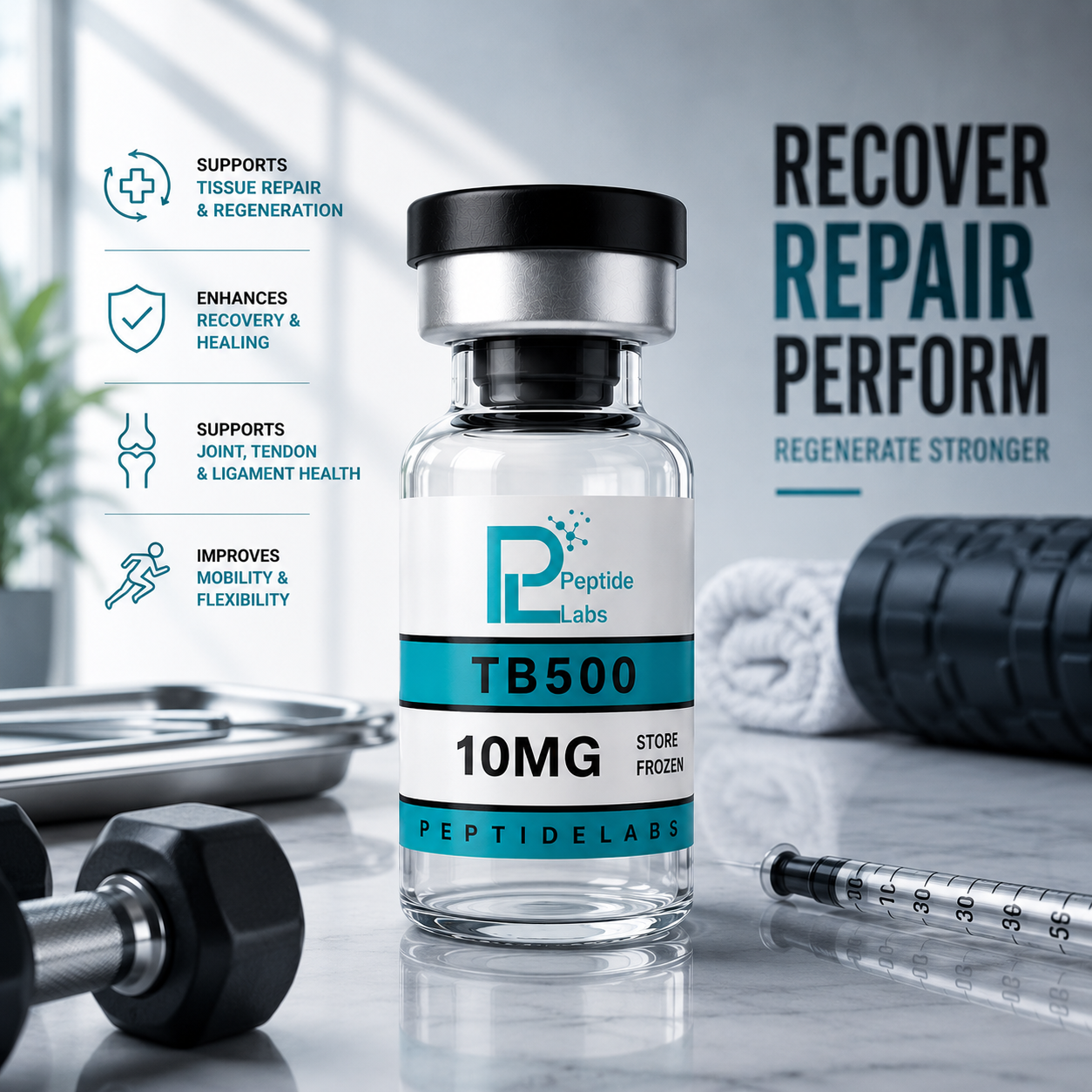

TB-500 Peptide 10mg
R950.00
RECOVER. RESTORE. REGENERATE
TB-500 is a synthetic peptide based on a region of Thymosin Beta-4, a naturally occurring protein involved in cell migration, tissue repair, and recovery processes. It is commonly researched for its potential role in soft-tissue support, mobility, inflammation response, and overall recovery.
TB-500 is often studied in relation to muscle, tendon, ligament, joint, and connective-tissue recovery. Unlike some peptides that are mainly researched for localised effects, TB-500 is commonly associated with systemic recovery support, meaning it may work throughout the body rather than only at one specific site.
WHAT YOU GET
Each TB-500 10mg kit includes:
- 1 × TB-500 10mg vial
- 1 × bacteriostatic water vial
- 5 × insulin needles
Peptide Labs South Africa supplies high-purity TB500 in lyophilised form for research purposes only.
- Add 2ml bacteriostatic water slowly into the vial 10mg vial.
- Add 2ml bacteriostatic water slowly into the vial.
- Gently swirl until fully dissolved.
- Do not shake aggressively.
- Refrigerate after mixing.
After mixing with 2ml bacteriostatic water:
- 5mg/ml concentration
- 1ml = 5000mcg
- 0.1ml (10 units) = 500mcg
- 0.2ml (20 units) = 1000mcg
- 0.4ml (40 units) = 2000mcg
- 0.5ml (50 units) = 2500mcg
TB-500 is commonly researched using subcutaneous administration (under the skin).
Suggested Weekly Dosage Schedule/Injection Protocol*
Standard Recovery Protocol
- Amount: 2mg (40 units)
- Frequency: 2× weekly
- Duration: 4–6 weeks
- Commonly researched for:
- General recovery, mobility support, and connective-tissue maintenance.
Because TB-500 is generally associated with systemic effects, it does not necessarily need to be administered near the affected area.
- Common Injection Areas
- Abdomen
- Waist / lower stomach fatty tissue
Some users report mild temporary redness, itching, or slight swelling at the injection site. These effects are generally temporary.
Before Reconstitution:
- Refrigerate after mixing
- Keep away from direct sunlight
- Best used within 28 days after reconstitution
Research suggests that TB-500 may support:
TB-500 is often studied in relation to muscle, tendon, ligament, joint, and connective-tissue recovery. Unlike some peptides that are mainly researched for localised effects, TB-500 is commonly associated with systemic recovery support, meaning it may work throughout the body rather than only at one specific site.
Key Research Areas
- TB-500 is commonly researched for:
- Supporting muscle and connective-tissue recovery
- Assisting tendon and ligament support
- Promoting mobility and flexibility
- Supporting recovery from strain and overuse
- Helping reduce inflammation response
- Supporting overall recovery and resilience
Important Notes/Disclaimer
TB-500 is commonly researched for systemic recovery support, especially in relation to soft tissue, tendons, ligaments, muscles, and joints. Effects are generally gradual and may build over several weeks.
For research purposes only. Not for human consumption. This product is not intended to diagnose, treat, cure, or prevent any disease.